

 Français
 Türkçe
 Azərbaycan
 Italiano
 Русский
 Español
 Uzbek
Uzbek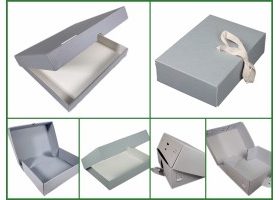 Acid Free Box
 Envelopes
 Multimedia
 Microfilm and Equipment
 Papers And Boards
 Scanners
 Adhesive and Glue
 Brushes
 Chemicals and Cleaners
 Cutters
 Devices
 Fabric And Leather
 Lab Materials
 Packaging İngredients
 Personal Protective Equipment
 Weights
 Roll Japanese Paper
 Sheet Japanese Paper
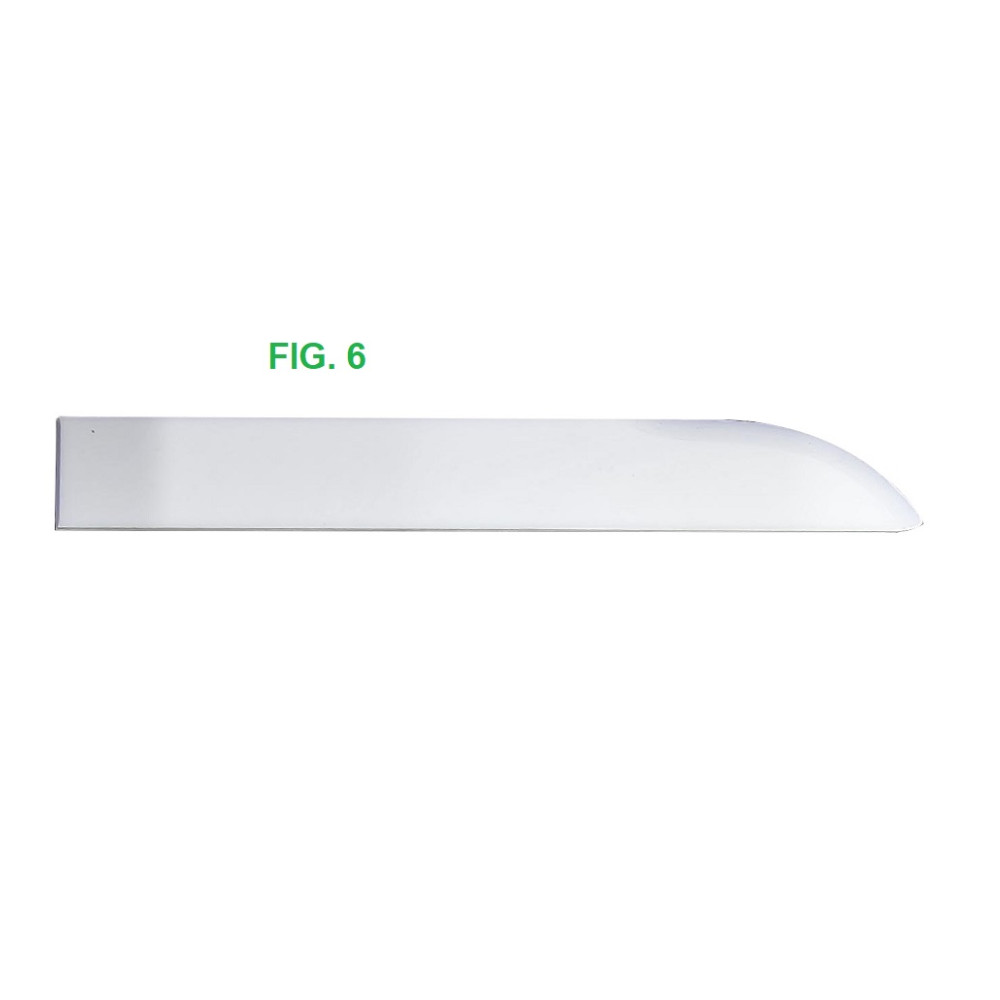
Teflon Folder Fig. 6 – 178 mm, 3 mm, Knife-Shaped
The Teflon Folder Fig. 6 is a professional PTFE hand tool for folding, pressing, smoothing and shaping paper, board, book cloth, leather and related materials. CTS Conservation lists it under reference R1200357 with a length of 178 mm, a thickness of 3 mm and a knife-shaped working profile.
Its geometry combines a broad surface for burnishing with a narrower edge for controlled work in folds, corners, joints and confined areas. It is not a cutting knife; knife-shaped describes only the profile.
PTFE has a low tendency to retain many residues and may be easier to clean than porous tools. It is not guaranteed to be non-marking or universally compatible with every ink, coating, adhesive or solvent. Always test first.
Teflon Folder Fig. 6 – 178 mm, 3 mm, Knife-Shaped
A professional PTFE hand tool for precise folding, pressing and conservation work
The Teflon Folder Fig. 6 is a professional PTFE hand tool for folding, pressing, smoothing and shaping paper, board, book cloth, leather and related materials. CTS Conservation lists it under reference R1200357 with a length of 178 mm, a thickness of 3 mm and a knife-shaped working profile.
Its geometry combines a broad surface for burnishing with a narrower edge for controlled work in folds, corners, joints and confined areas. It is not a cutting knife; knife-shaped describes only the profile.
PTFE has a low tendency to retain many residues and may be easier to clean than porous tools. It is not guaranteed to be non-marking or universally compatible with every ink, coating, adhesive or solvent. Always test first.
Key Features
178 mm length
Balanced size for controlled hand work.
3 mm thickness
Thin and precise working profile.
Knife-shaped edge
Access to folds, corners and tight areas.
PTFE body
Smooth surface with low adhesion.
Versatile use
Binding, conservation and box making.
R1200357
CTS Conservation reference.
About the Product
Why the Knife Shape Matters
The tapered working edge provides access near book joints, board edges, box corners and narrow folds. The tool should never be sharpened or used for cutting.
Use in Bookbinding
It can assist with turning in cloth or leather, shaping corners, defining joints, pressing cover material and smoothing pasted layers.
Use in Paper Conservation
It may be used to settle Japanese tissue, press repair paper, flatten local areas and apply light pressure through an appropriate release layer.
Archive and Museum Work
It supports the manufacture of archival boxes, folders, envelopes and custom enclosures. Institutional treatment procedures should always be followed.
Working with Adhesives
Remove starch paste, methylcellulose, PVA and similar residues before they dry. Do not scrape dried adhesive from the tool with a metal blade.
Pressure Control
Excess pressure can produce shine, crushing, fibre breakage, coating deformation or ink transfer. Several light passes are safer than one heavy stroke.
Sensitive Materials
Do not use directly on fragile paper, photographs, friable media or soluble inks without specialist assessment and an appropriate protective interleaf.
Safe Handling
Although it is not sharp, the narrow edge should be handled responsibly. Keep it away from children and use it on a stable work surface.
Storage
Store flat, clean and dry in a drawer or sleeve, away from heavy loads, high heat, open flame and sharp metal tools.
Who Is It For?
Bookbinders, paper and book conservators, archivists, museum technicians, box makers, students and skilled craft practitioners.
Applications
- Bookbinding
- Covering boards
- Pressing book joints
- Paper conservation
- Archival repair
- Japanese tissue application
- Box making
- Board folding
- Smoothing board edges
- Laying book cloth
- Leather covering
- Photographic enclosures
- Map repair
- Manuscript conservation
- Album making
- Scrapbooking
- Origami preparation
- Paper models
- Print finishing
- Collage
How to Use It
- Clean the work surface and tool.
- Test on an inconspicuous sample.
- Mark the fold with a suitable guide.
- Hold the tool at a low angle.
- Use several light passes.
- Work from the centre outward on pasted surfaces.
- Use a protective interleaf on delicate materials.
- Remove residue immediately after use.
Cleaning and Care
Remove starch paste, methylcellulose, PVA and similar residues before they dry. Do not scrape dried adhesive from the tool with a metal blade.
Technical Specifications
| Product name | Teflon Folder Fig. 6 – 178 mm, 3 mm, Knife-Shaped |
|---|---|
| Material | PTFE |
| Length | 178 mm |
| Thickness | 3 mm |
| Profile | 178 mm, 3 mm, Knife-Shaped |
| Reference | R1200357 |
| Use | Bookbinding, paper conservation and archival work |
Frequently Asked Questions
It is marketed as a Teflon folder; the material is generally described as PTFE.
178 mm.
3 mm.
R1200357.
No. Knife-shaped describes the profile only.
Yes, for folding, pressing, corners and joints.
Yes, after testing and within an appropriate treatment method.
PTFE has low adhesion, but residue can still dry and must be removed.
Only after specialist assessment and with a protective interleaf.
Excess pressure can burnish a surface.
With a soft, lint-free cloth.
Only after compatibility is confirmed.
No; sanding can damage the surface.
Keep it away from open flame and high heat.
Yes, after practising on expendable material.
Product Information
Contact us for stock, pricing and ordering information.
Be the first to review “Teflon Folder Fig. 6 – 178 mm, 3 mm, Knife-Shaped”
Related products
Conservation Equipments And Tools

Conservation Equipments And Tools
Conservation Equipments And Tools
Conservation Equipments And Tools
Conservation Equipments And Tools
Conservation Equipments And Tools
Conservation Equipments And Tools
Conservation Equipments And Tools
Reviews
There are no reviews yet.